We Build with Purpose: From the plant floor to the front office, we build IT environments that are customized for your business.
Tough | Secure | Resilient
MoreWe design, secure and manage environments that fit your operation, your people and your compliance needs.
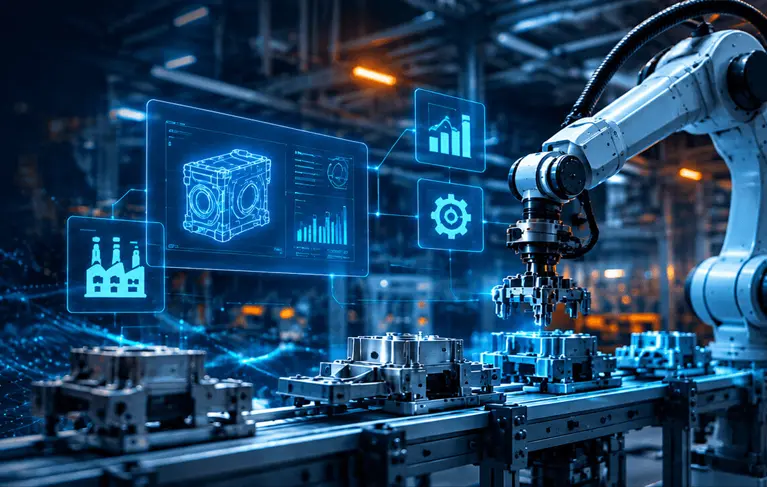
Most manufacturers never set out to be technology companies. But look at your floor. Machines send data to software. Orders move through your ERP. Scheduling, quality checks, and shipping all depend on systems that need to talk to each other. When they do, nobody thinks about it. When they don't, everyone does. Technology used to be optional. Then Industrial IoT, smart PLCs, and automation came along, and now it's an integral part of staying in business. Competition keeps getting tighter, and staying compliant means chasing a moving target.
We design, secure and manage environments that fit your operation, your people and your compliance needs.
Tough | Secure | Resilient
MoreYour production line depends on not just switches, servers and firewalls.
Your shop floor, office teams, and third party providers have completely separate requirements, stop treating them the same way.
PLC | DCS | HMI | SCADA | MODBUS | MQTT | DeviceNet
MoreMany manufacturing environments have grown organically over the years.
They were never built to keep pace with evolving technology, shifting processes, or rising demands. Some of those systems are still irreplaceable as Production depends on them.
More“We've worked with other managed service providers, but as our needs grew, we needed more than they could offer. Osiris made the transition almost seamless, production never skipped a beat, and everything just works.”
Bryan Combs
Director of IT
Grating Pacific
We know why a PLC running Windows XP can't just be patched, why "air gapped" hasn't meant anything since IIoT connected your sensors to the internet, and why security has to work around your production schedule, not against it
Whether it's an acquisition or years of organic growth, every site ends up different. Different legacy systems, different vendors, different issues to solve.
We bring years of experience managing complex IT across multiple locations, separated by region, timezone, and governance requirements.
Environments we build are designed with high availability in mind, so no single failure stalls your entire production line.
Every update request goes through scheduled change control, tested and certified before it even touches your infrastructure.
Protect your contracts, process specs, and other valuable intellectual property with advanced encryption,
lifecycle management, & zero trust access.
We go beyond the standard.
Next generation firewalls can tell the difference between real ERP and malicious activity posing as legitimate traffic. EDR analyzes machines for unusual behavior, isolating and remediating threats before they spread.
Every user, device, and connection gets checked every time, and access is scoped to exactly what's needed, nothing more. A stolen password or a compromised laptop stops at the door instead of reaching your whole network
Something will eventually break, whether it's ransomware, an act of nature, hardware failure, or human error.
What matters is how fast you're back up.
We build recovery into your infrastructure from day one: tested backups, failover that's ready before you need it, and a plan your team can execute the moment something goes wrong.
Automation should give time back to your people, not replace judgment that took years to build.
We design it that way. Every system stays reviewable, every decision stays traceable, and your team stays in control of what the automation does, not the other way around.
The result is AI that actually does something, not a demo built to impress in a meeting.
You don't need a full-time executive to make smart IT decisions.
You need someone who's already made them before, at a price that fits a business your size.
Our fractional CIO service brings executive-level planning to your budget conversations, your roadmap, and your priorities, without the full-time salary.
Machines, sensors, and software now share the same network, and this is only the beginning.
We modernize that infrastructure without disrupting your production schedule.
Industrial network equipment is built for manufacturing environments. It withstands extreme temperatures, dust, vibration and humidity that would compromise standard equipment.
It supports devices, sensors and automation while delivering reliable, low latency connections across your entire operation.
With built-in security, redundancy, and the ability to scale as your production grows, it ensures your operations stay connected, efficient, and resilient, where traditional networks often fall short.
Manufacturing networks span production systems, supplier connections, cloud platforms and remote staff. That range creates risk that standard security tools were not built to handle.
Our solutions connect threat detection, network segmentation and identity management across your whole operation, from the factory floor to the cloud.
In manufacturing, network downtime is not an inconvenience. It costs production time, order fulfilment and in some cases regulatory compliance. A network built for resilience means that when hardware fails or a connection drops, operations continue without interruption.
We design and deploy highly resilient networks that recover automatically utilizing intelligent routing and failover mechanisms. Continuous monitoring means the issue will be resolved seamlessly without an impact to your production.
IoT sensors, robotics and AI are already on the factory floor, and Industry 4.0 will bring more. Each new system adds traffic, creates new connection requirements and raises new security considerations.
In traditional network, absorbing all of that means manual work, on-site visits and lead times the business cannot always wait for.
We build networks that handle that change without the overhead. Capacity adjusts as new systems come online, policies apply automatically and the whole operation is managed from one place rather than site by site.
Operational technology (OT) is the hardware and software that monitors and controls physical processes on the plant floor, as opposed to IT, which handles data and business systems. Information technology and operational technology serve different purposes, run on different lifecycles, and fail in different ways. Treating them the same way usually means neither gets the expertise and the service it needs.
Separate lifecycle and budget planning: IT hardware refreshes every 3-5 years, while OT equipment runs 15-30 years.
Planning and budgeting for them together hides OT's long term needs, such as legacy support, vendor contracts, and controlled upgrades.
Change control that fits each side: An IT change window is often an evening. An OT change may need production scheduling, vendor sign-off, and a rollback plan tied to a shift or job run.
Different security priorities: IT follows confidentiality, integrity, availability. OT flips it to safety, availability, integrity. Applying standard IT controls, like aggressive scanning or forced reboots, to OT can cause the outage you're trying to prevent.
Reduced blast radius: Segmenting OT from the corporate network means ransomware that lands on an office PC through phishing is much less likely to reach the plant floor. Separate support models make that segmentation easier to maintain over time.
Compensating controls for what can't be patched: Unsupported operating systems and legacy controllers need segmentation, allowlisting, and monitoring instead of routine patching. That requires OT-aware security thinking.
Protocol and tooling differences: Modbus and PROFINET are not covered by typical IT tools. OT monitoring requires passive, protocol-aware visibility that will not disrupt fragile devices.
Controlled remote access: Vendor connections into machines are a leading attack path. Handling them through a dedicated, logged, MFA-protected process, separate from general IT access, keeps them from becoming an unmanaged back door.
Specialized skills: Troubleshooting a PLC, a VFD fault, or a Fanuc controller is a different discipline from supporting Microsoft 365 or Active Directory. Each side needs technicians who understand its tools, vendors, and failure modes.
Different response expectations: A user who can't print is an inconvenience, while a down production line costs money every minute. OT support needs faster escalation, on-call coverage tied to shifts, and a safety-first mindset.
Vendor coordination: OT support often runs through machine builders and integrators who control what can be installed or modified. Managing those relationships separately avoids voiding warranties or support agreements.
Backup and recovery that match the asset: IT recovery focuses on files, servers, and cloud data. OT recovery means PLC programs, HMI projects, CNC parameters, robot backups, and license keys, each with its own tools and testing.
Cleaner incident response: When something breaks, separate runbooks and contacts help teams quickly decide whether it's an IT issue, an OT issue, or a crossover, and avoid changes that make the problem worse.
The goal is coordinated separation: distinct ownership, policies, and skills on each side, with a defined boundary and shared communication between them. That structure lets each side be managed on its own terms while the connection between them stays deliberate and monitored.
For manufacturers, this is usually the difference between an IT provider that keeps offices running and a partner that can protect production.
Legacy systems are the machines and software already running your shop, and most of them still work. Replacing it can cost six figures and weeks of lost production, and sometimes no newer version exists.
The job is to keep these systems safe and running until you choose to replace them.
Production depends on them. If a machine makes money, it needs support. Ignoring it doesn't remove the risk.
Replacing is expensive. New equipment, tooling, retraining, and lost output add up fast. Support lets you replace on your schedule, not the machine's.
They are a security risk if left alone. Old operating systems can't be patched. Anyone who can reach the machine can read it or change it. We isolate legacy machines from regular networks, lock down their ports and require MFA on remote access.
Backups matter more here. Programs, settings, and license keys often live on a single machine. If it fails, you can't buy the same part off the shelf. We keep copies and test the restore.
Customers and insurers ask about them. CMMC and cyber insurance questions now cover older systems. A clear and separate plan for them helps you pass.